
GI wire is made in 11 steps at the RIICO Jaipur plant: inspect, descale, draw, anneal, pickle, rinse, flux, hot-dip galvanize at 450–460°C, wipe, cool, inspect. Certified to IS 280 and IS 3975.
Manufacturing
Process
From Steel Wire Rod to Galvanized Wire — a meticulously engineered 11-step process where raw material is transformed into corrosion-resistant GI wire through drawing, heat treatment, chemical preparation, and hot-dip galvanizing.
Conversion of MS Wire Rod to MS Wire
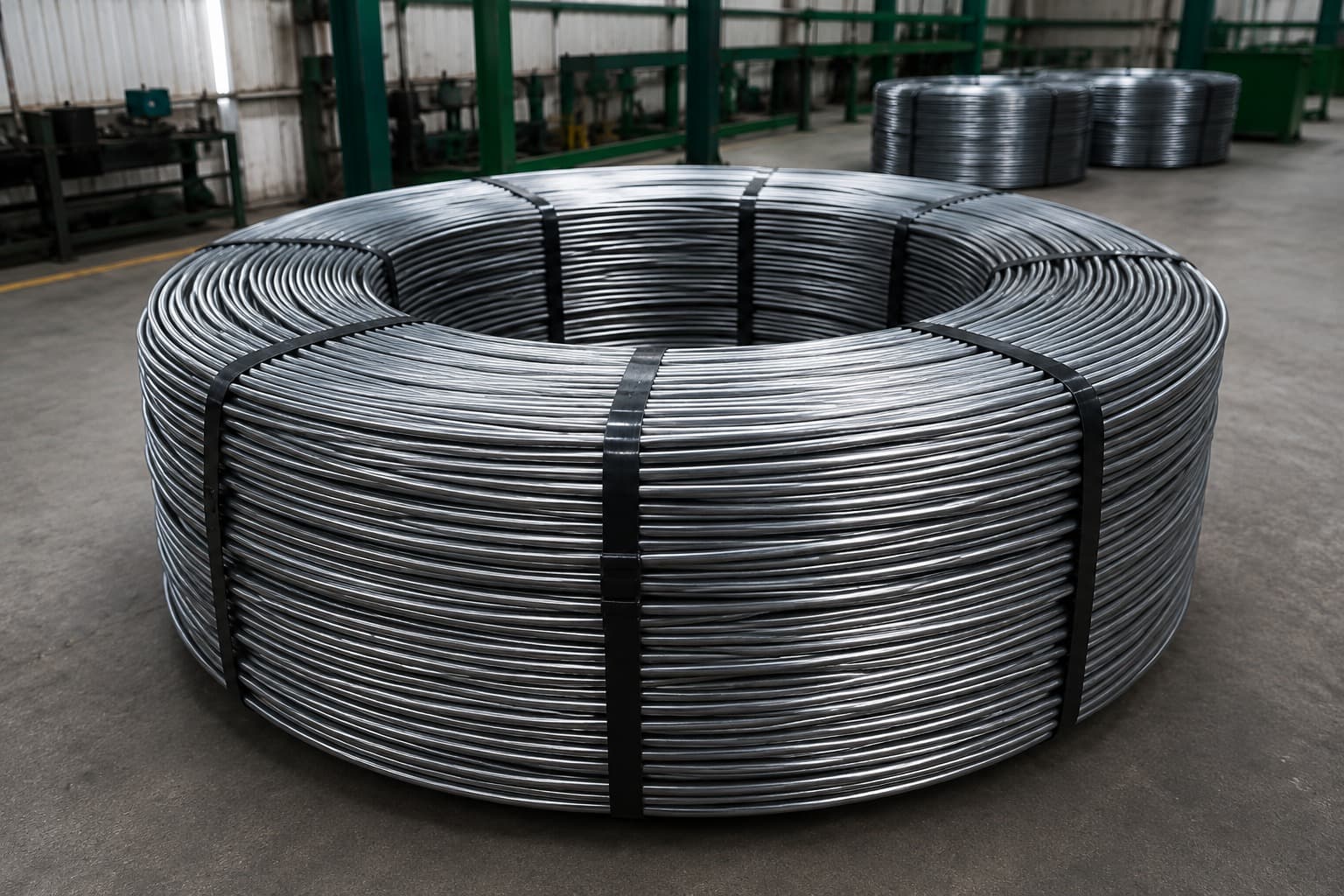
Raw Material Inspection
MS wire rod coils are inspected for surface defects, diameter tolerance, and carbon content before entering the production line.
Only premium low-carbon steel wire rods sourced from certified mills pass through. Each coil undergoes visual inspection for surface defects, checks for diameter tolerance, and verification of mill test certificates confirming carbon content and tensile strength.
Rigorous incoming inspection ensures consistent metallurgical composition and dimensional accuracy — the foundation of every GI wire coil.
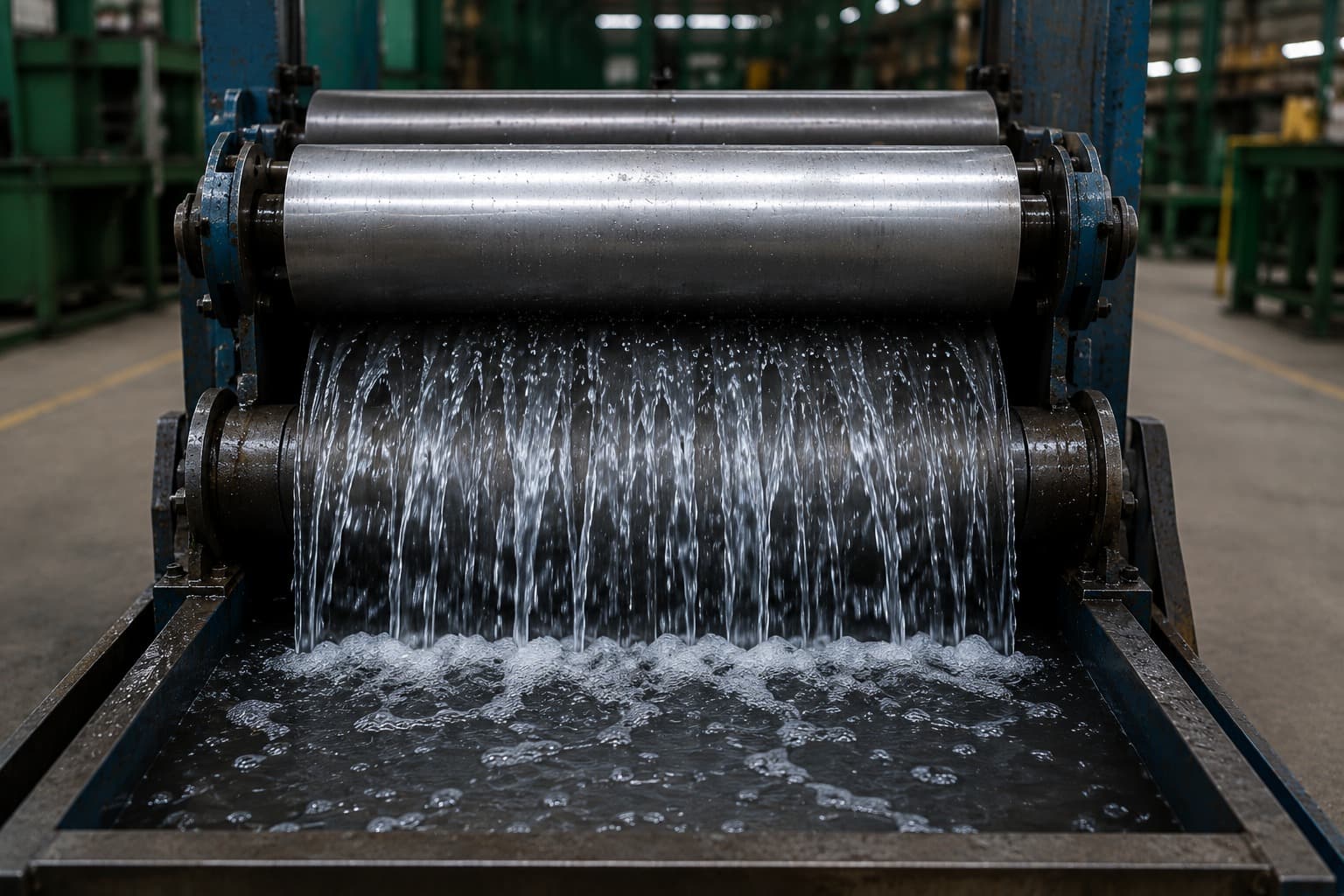
Descaling & Surface Preparation
Wire rod is mechanically descaled to remove mill scale, rust, and surface impurities.
The wire passes through a series of breaker rolls and abrasive brushes that fracture and remove mill scale. This mechanical preparation ensures a uniformly clean surface and reduces acid consumption during pickling.
Mechanical descaling removes the brittle oxide layer, exposing clean steel for effective downstream processing.
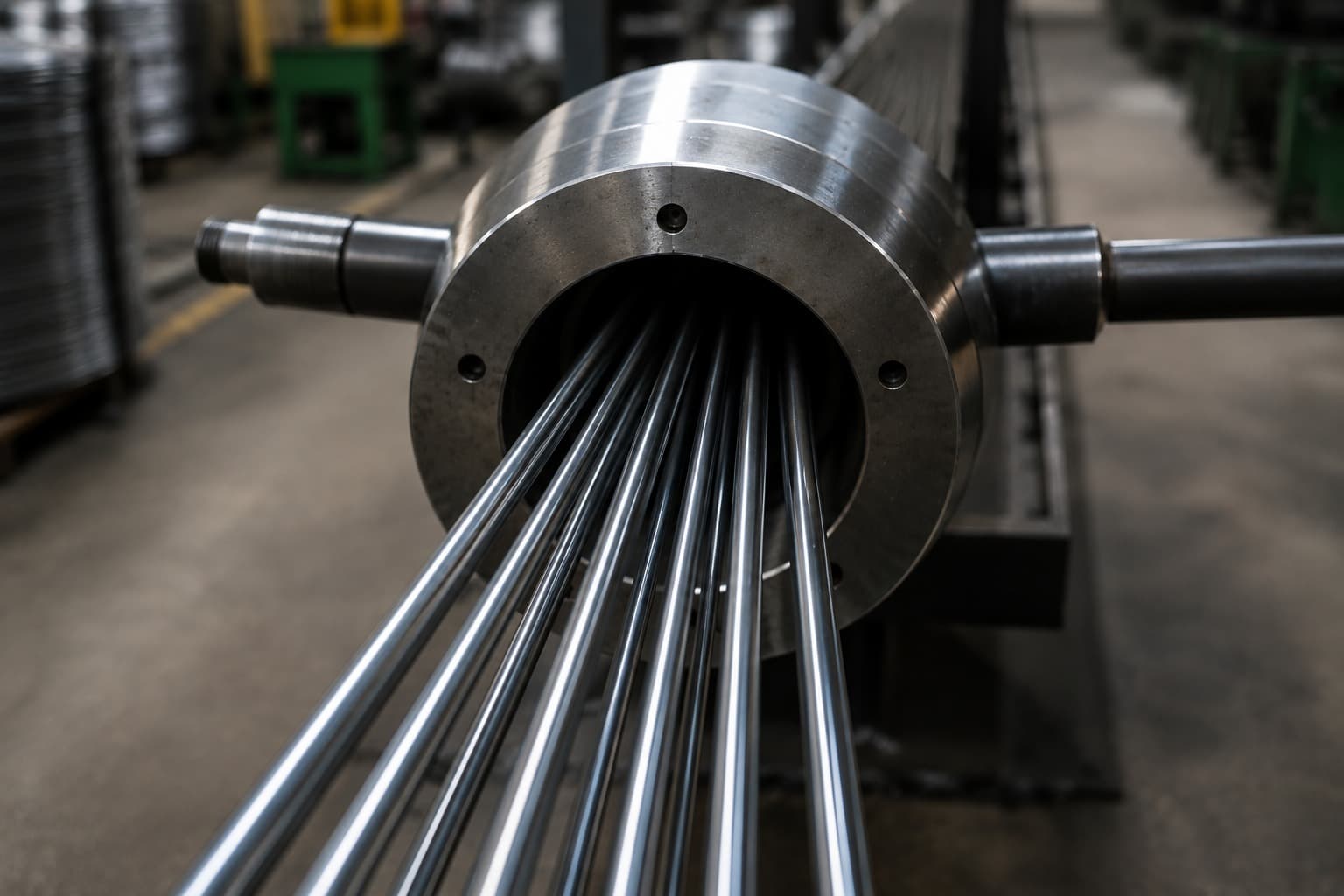
Wire Drawing
Cleaned wire is drawn through a series of tungsten carbide dies to reduce diameter and achieve target tensile strength.
Wire is pulled through tungsten carbide dies of progressively smaller apertures. Each pass reduces cross-section while increasing tensile strength through work hardening. Lubrication and cooling prevent surface damage and maintain die life.
Progressive die drawing achieves precise diameter control and work-hardens the wire to meet strength specifications.
Hot-Dip Galvanizing Process
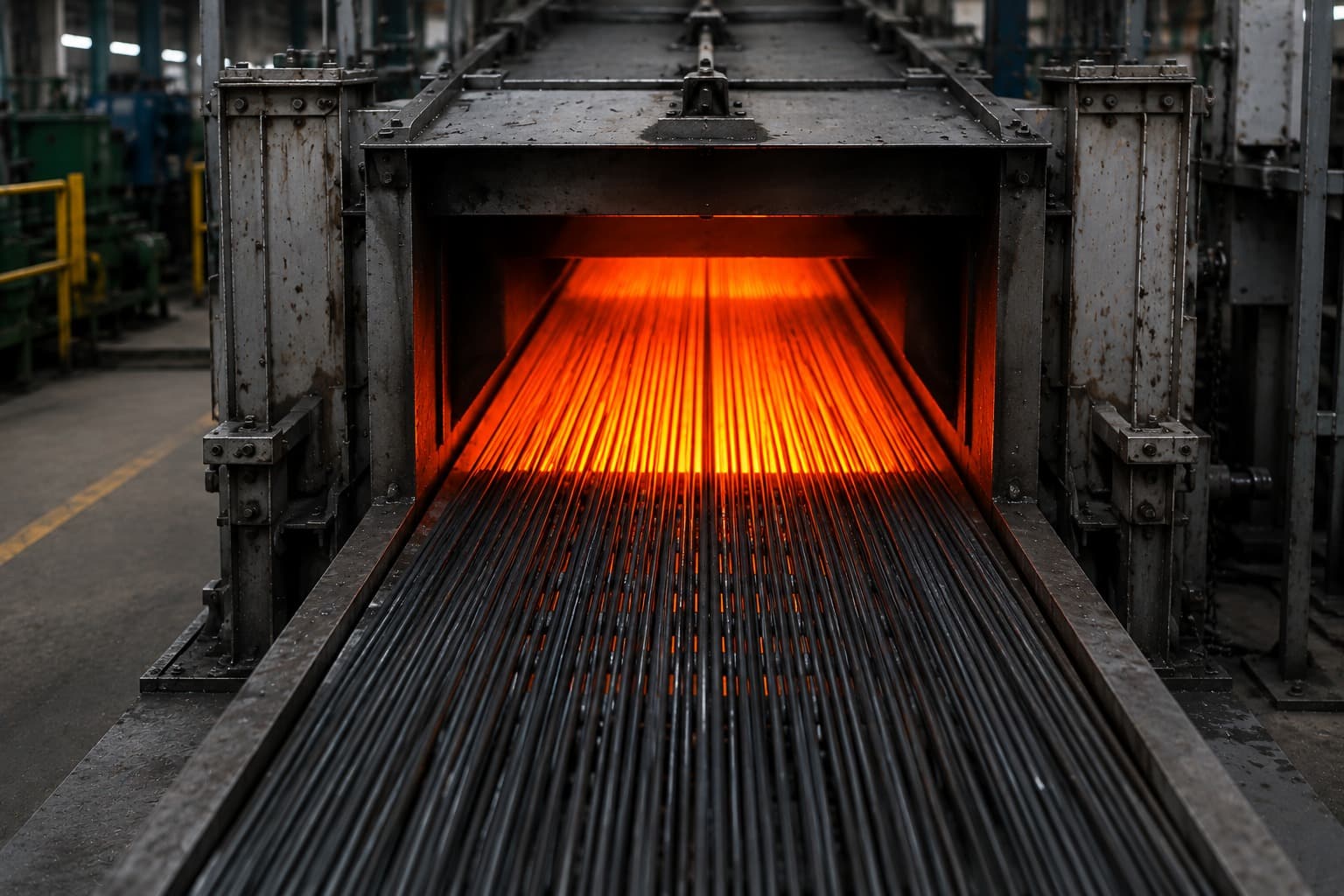
Annealing
Drawn MS wire is annealed in a controlled atmosphere furnace to improve ductility and remove internal stresses.
In a nitrogen-hydrogen atmosphere furnace, the wire is heated to precisely controlled temperatures and slowly cooled. This recrystallization process softens the wire and eliminates internal stresses from the drawing process.
Controlled atmosphere annealing restores ductility, relieves work hardening, and creates a clean oxide-free surface essential for uniform zinc adhesion.
Water Quenching & Cooling
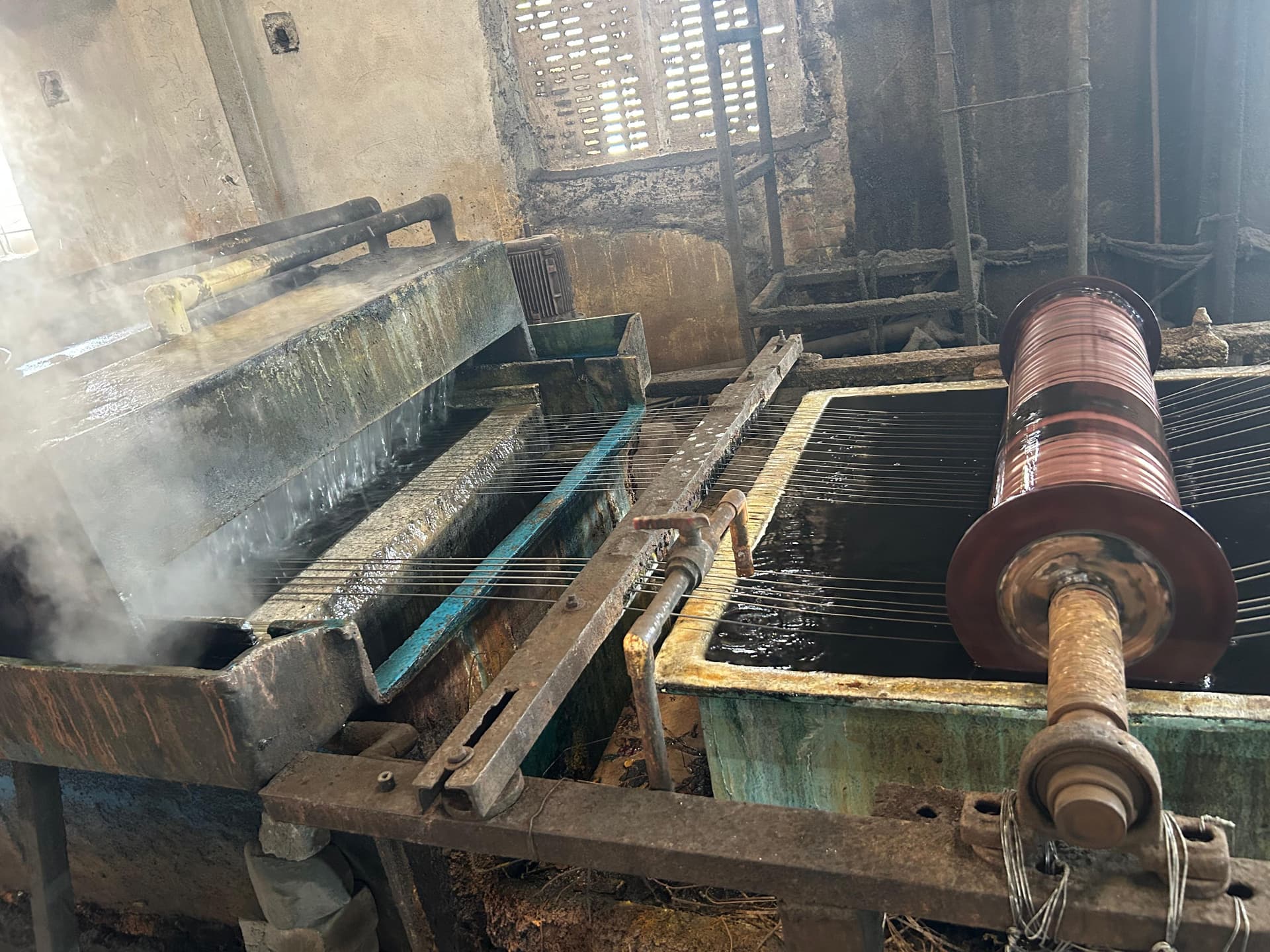
Annealed wire is rapidly cooled in a water quench to lock in the softened metallurgical structure.
Immediately after the annealing furnace, the wire passes through a water quench tank. This controlled cooling halts the annealing process at the optimal point, preserving ductility while preventing surface oxidation before pickling.
Rapid quenching stabilises the recrystallised grain structure, preparing the wire for the chemical cleaning stages that follow.
Pickling
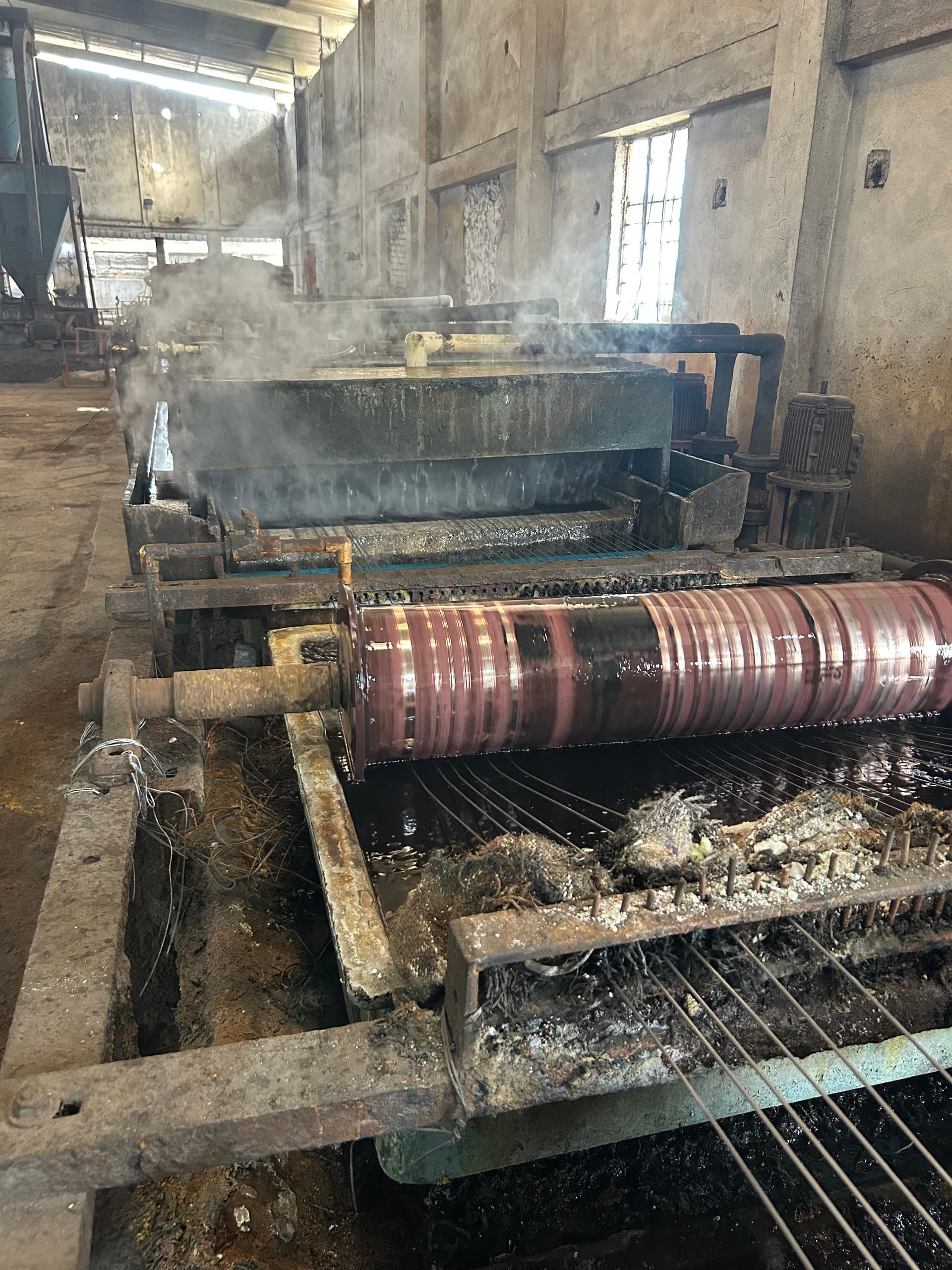
Wire passes through a dilute acid bath to remove residual oxide and create a chemically clean surface.
The wire is immersed in a dilute hydrochloric acid bath. The acid dissolves residual iron oxides without attacking the base steel. Bath concentration, temperature, and immersion time are carefully controlled to achieve a uniformly etched surface.
Acid pickling dissolves any remaining scale or oxide layer, exposing pure steel for a metallurgically sound zinc-iron bond.
Rinsing
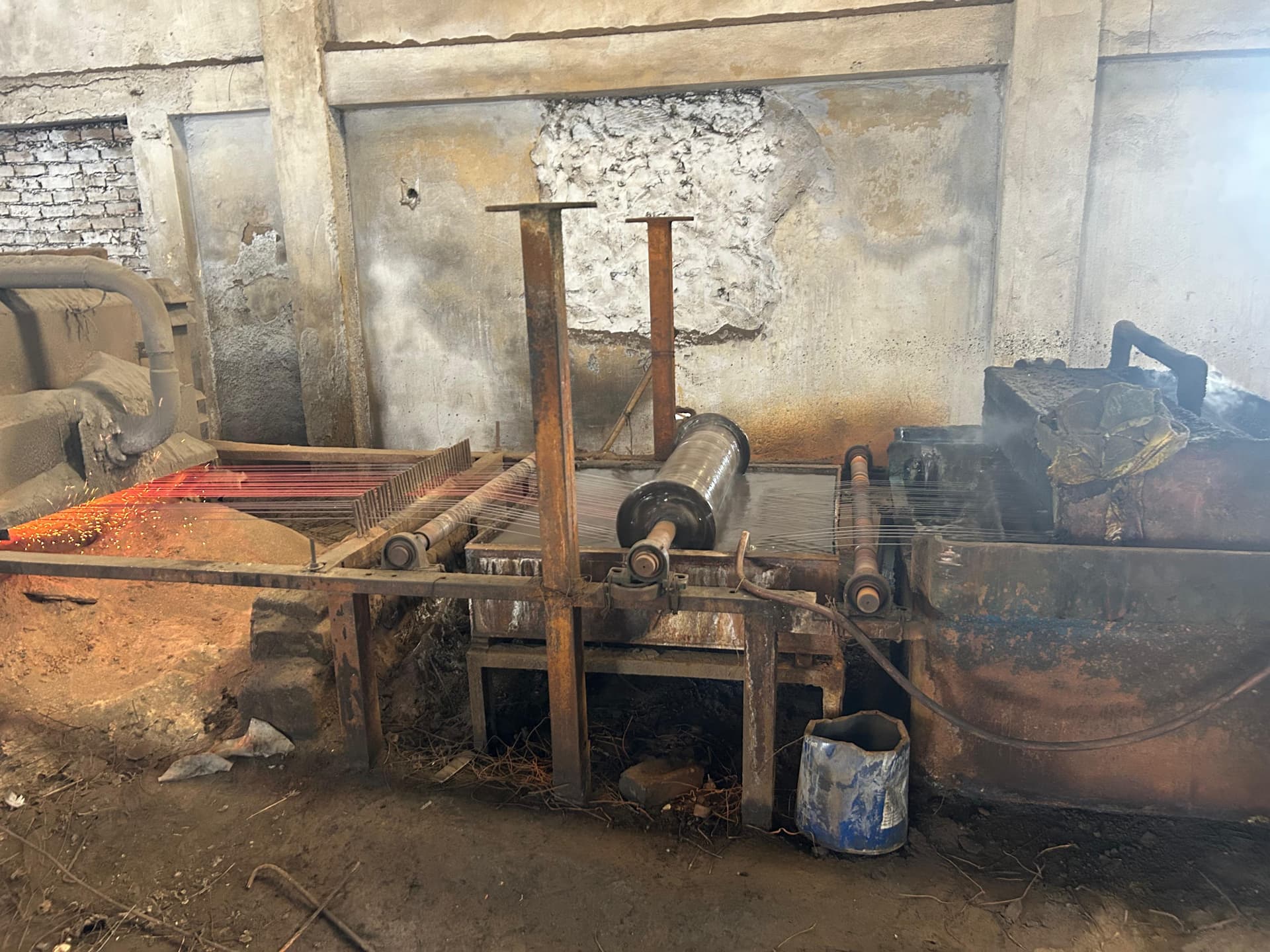
Pickled wire is thoroughly rinsed with high-pressure water to remove all acid residues.
High-pressure water jets rinse the wire immediately after pickling, removing all traces of acid and dissolved iron salts. Multi-stage rinsing with cascading water flow minimises water consumption while achieving a neutral surface pH.
Complete rinsing prevents acid carryover into the flux bath, ensuring consistent flux chemistry and uniform galvanizing.
Fluxing
Wire passes through a flux solution that promotes wetting and ensures a uniform reaction with molten zinc.
The wire passes through a hot flux solution (typically zinc ammonium chloride). The flux decomposes on contact with the hot wire, releasing hydrochloric acid that gives a final etch, while the zinc salt deposits a thin layer that promotes immediate alloying with molten zinc.
The zinc ammonium chloride flux cleans the wire surface and prevents re-oxidation just before it enters the zinc bath, enabling a flawless coating.
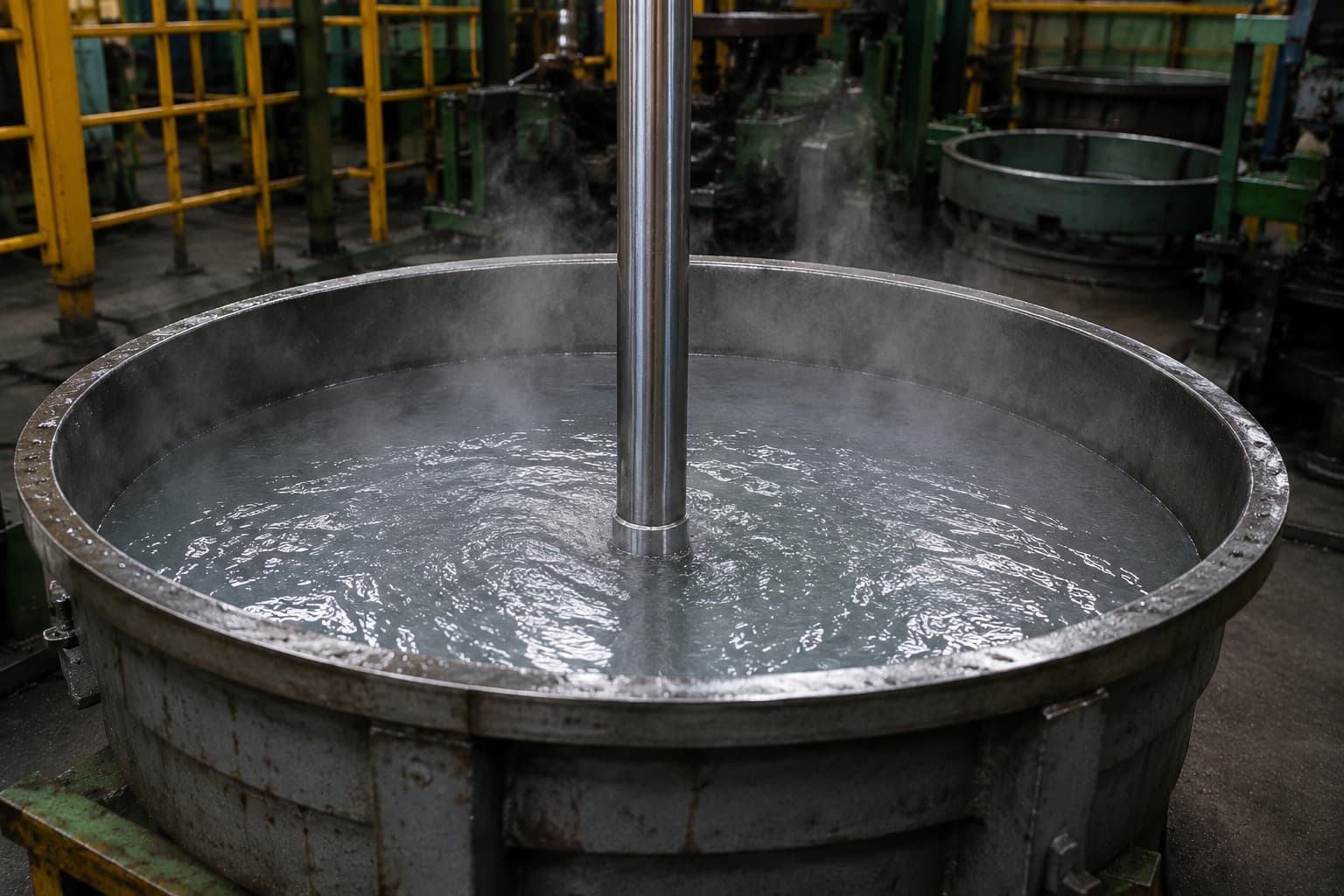
Hot-Dip Galvanizing
Wire enters a bath of molten zinc at 450–460°C, forming tightly bonded zinc-iron alloy layers.
The wire travels through a bath of molten zinc maintained at 450–460°C. A diffusion-controlled reaction forms sequential intermetallic layers — Gamma (adjacent to steel), Delta, Zeta, and a pure Eta layer on the surface. Immersion time and bath chemistry are precisely controlled.
The metallurgical reaction between iron and molten zinc produces a multi-layer coating (Gamma, Delta, Zeta, Eta) that delivers 25+ years of corrosion protection.
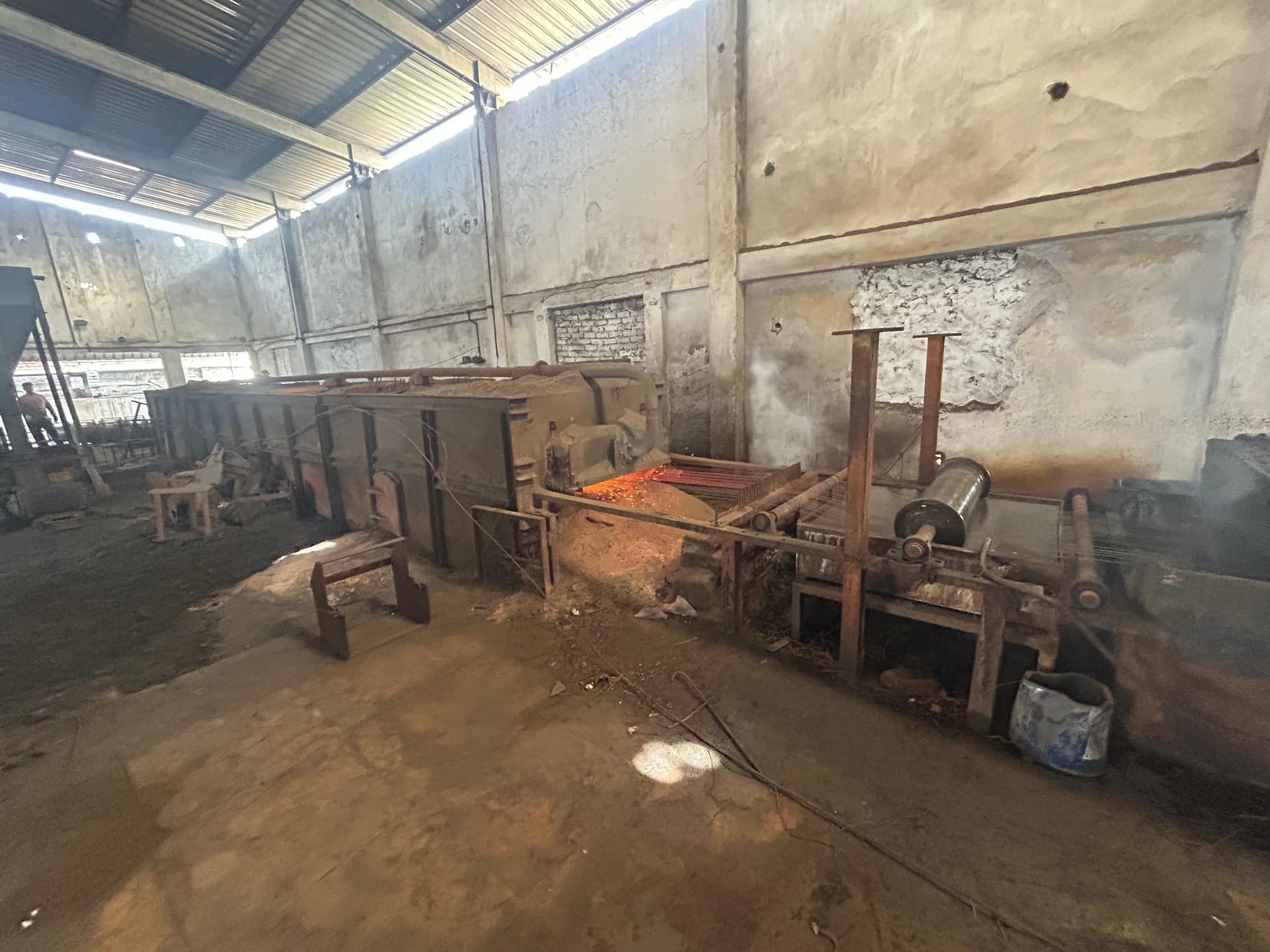
Wiping & Coating Control
As the wire exits the zinc bath, adjustable wiping dies control coating thickness with precision.
Immediately above the zinc bath, a set of adjustable ceramic or asbestos wiping dies surround the exiting wire. The dies scrape off excess molten zinc, controlling the final coating thickness to within tight tolerances. Die alignment and pressure are critical for uniform coating.
Wiping dies meter the exact coating weight required by IS 280 standards, removing excess zinc while ensuring uniform coverage.
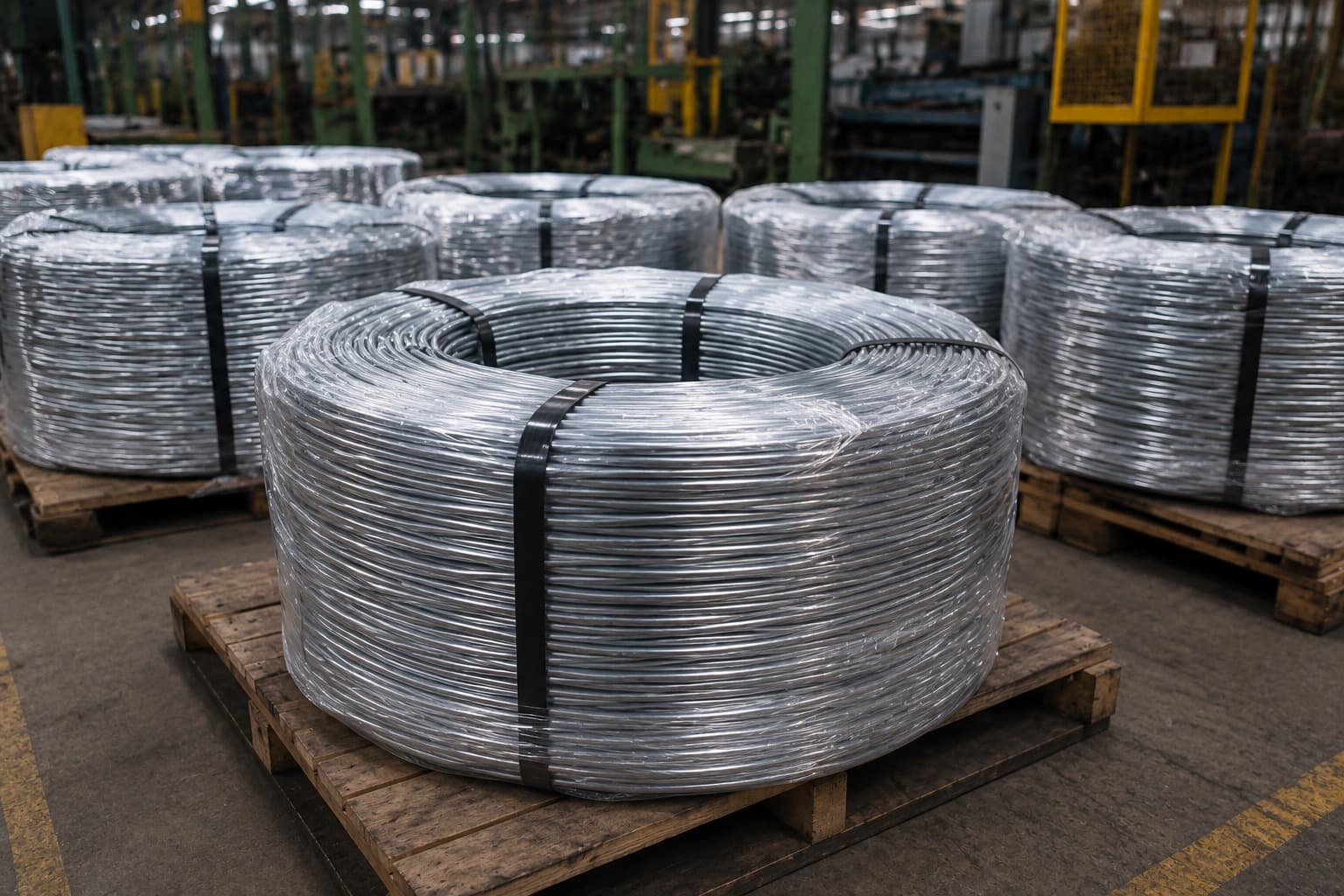
Cooling, Coiling & Inspection
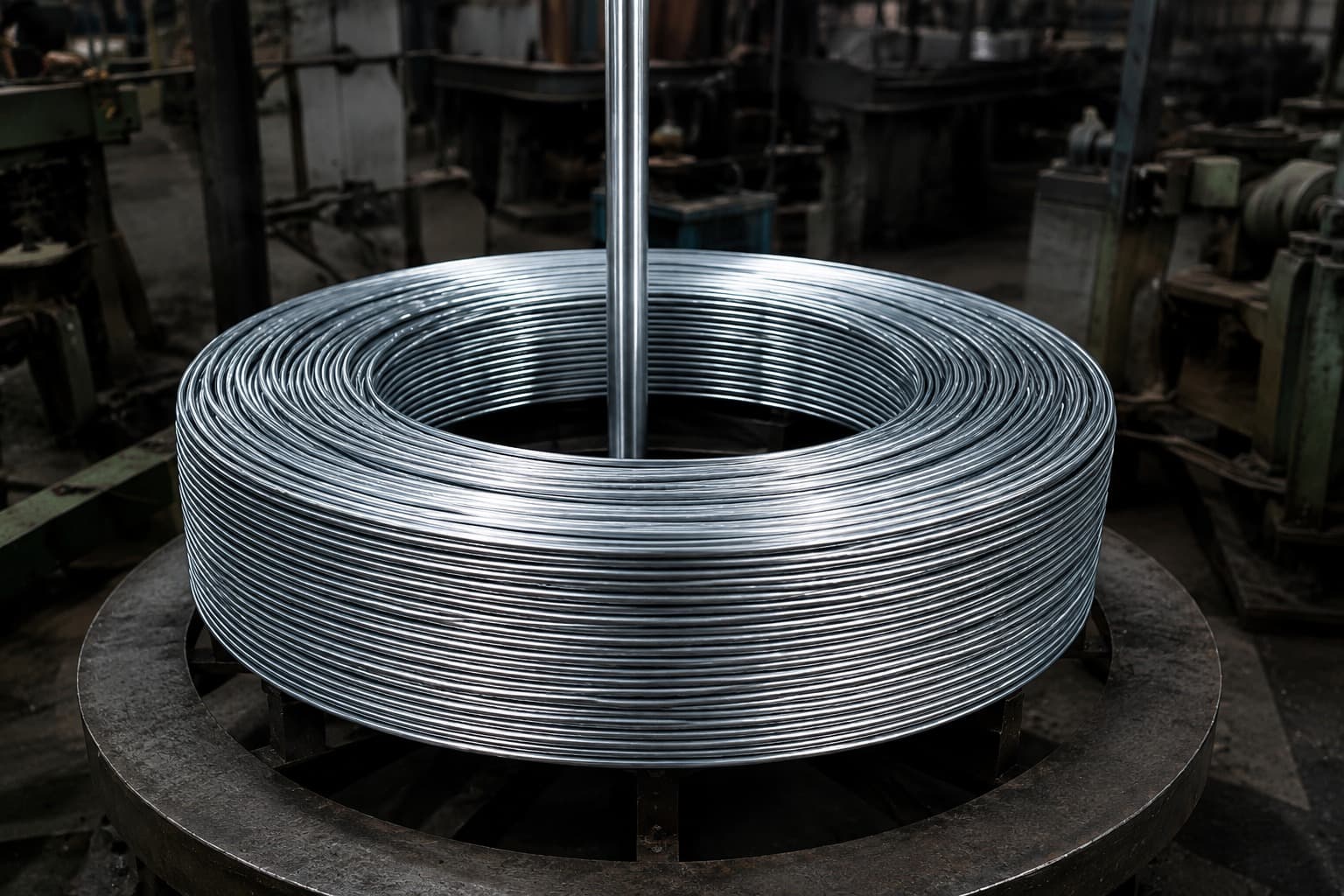
Galvanized wire is air-cooled, precision-wound into coils, inspected, and prepared for dispatch.
The wire is air-cooled on a long cooling conveyor to solidify the coating fully. Automatic winding machines produce uniform coils weighing 25–150 kg. Each coil is weighed, tagged with a unique batch number, sampled for QC testing, and wrapped in Hessian cloth with steel strapping.
Controlled cooling sets the final coating, while automated winding and batch traceability ensure every coil meets quality standards.
End of Process
Process Flow
End-to-end journey of GI wire manufacturing — from incoming MS wire rod to the finished galvanized product.
Finished Products
From our galvanizing lines emerge a complete range of GI wire products serving construction, agriculture, industry, and infrastructure.
Hot Dip Galvanized MS Wire
IS 280 compliant galvanized steel wire manufactured through our 11-step hot-dip process. Available in soft, half-hard, and hard grades for fencing, binding, and industrial applications.
Round Wire for Cable Armouring
IS 3975 compliant galvanized round wire engineered for mechanical protection in power, control, and communication cables. Tested for low resistivity and high elongation.
Formed Wire (Strip) for Cable Armouring
IS 3975 compliant galvanized formed wire (flat strip) for cable armouring applications. Precision-formed with uniform zinc coating for reliable cable protection.
Experience Precision
Every coil that leaves our facility carries 30+ years of metallurgical expertise. Partner with us for wire that performs.